The Book of Enoch emerged in a turbulent era, likely between 300 and 100 BCE, when Jewish communities faced Hellenistic influences and internal debates over divine law. Not included in most biblical canons, it was revered by early Jewish and Christian groups, influencing texts like Jude 14–15 and Revelation.
The Book of Watchers, its earliest section, was likely composed in Aramaic or Hebrew, preserved in Ethiopic (Ge’ez) and Greek fragments. It expands Genesis 5:24’s brief note that Enoch “walked with God” and “was not,” casting him as a prophet granted divine visions.
Drawing from oral traditions and texts like Jubilees, it addresses a world where justice seemed elusive, offering a cosmic framework for understanding evil’s origins and God’s response. This context shapes the Book of Watchers as both a theological narrative and a call to faithfulness.
Chapters 1–5: Judgment and Nature’s Obedience
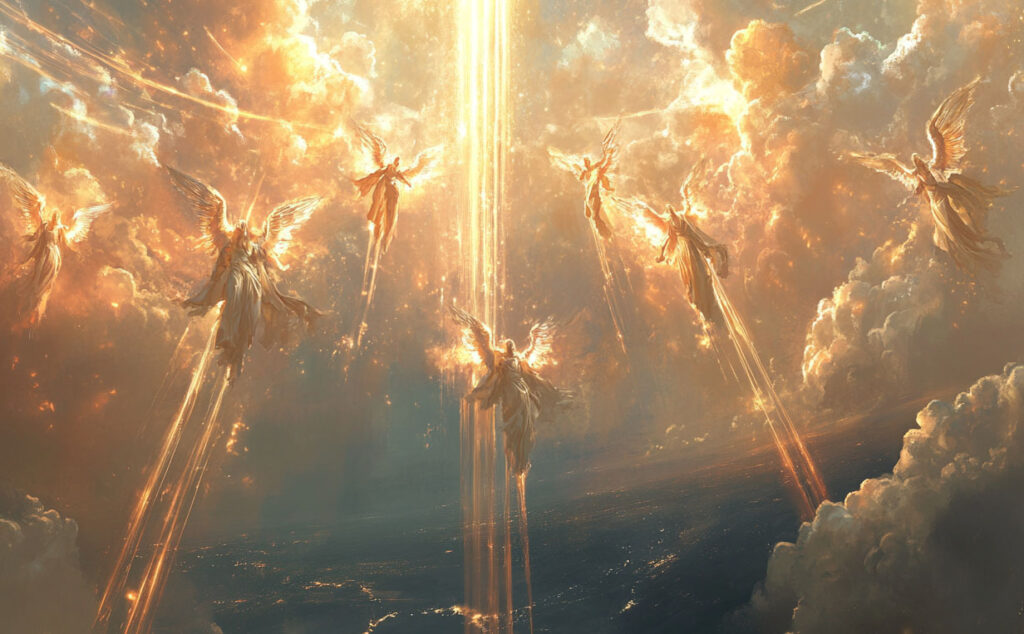
Chapters 1–5 introduce Enoch’s prophetic vision of divine judgment, establishing the Book of Watchers’ central theme: God’s justice is as unyielding as creation’s laws.
Chapter 1 depicts a celestial courtroom where God, the “Holy and Great One,” descends with “myriads” of angels to judge humanity. Sinai, the mount of the Law, is the stage, linking divine justice to the covenant. Mountains tremble, sinners face reckoning, and the righteous receive “light” and grace, echoing Deuteronomy 33’s blessings and curses. Jude 14–15 later quotes 1:9, underscoring its weight in early Christian thought.
Chapters 2–4 contrast nature’s obedience with human rebellion. The sun, moon, and stars follow God’s rhythm without deviation, while fourteen evergreens symbolize steadfastness, possibly alluding to enduring righteousness. The sun’s precise path sustains life, a silent rebuke to human disorder.
Chapter 5 addresses sinners directly, warning that defiance – especially slander – leads to self-inflicted misery . The righteous, however, gain wisdom, peace, and long life, classic covenantal blessings (5:7–9; Exodus 20:12).
Scholars interpret this as a moral binary: align with creation’s order or face consequences. The natural world, from stars to trees, serves as evidence of divine design, urging readers to choose righteousness.
Chapters 6–11: The Watchers’ Fall and Divine Intervention
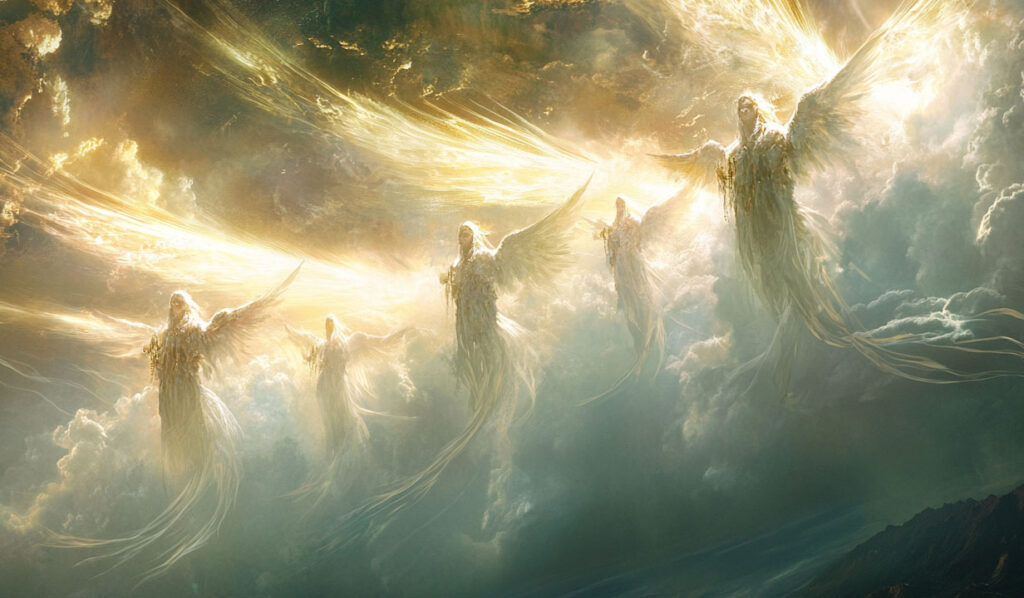
Chapters 6–11 form the narrative heart of the Book of Watchers, recounting the angels’ rebellion and its catastrophic impact.
In chapter 6, 200 angels, led by Semjaza, swear an oath on Mount Hermon to marry human women, defying their divine role. Hermon’s name, linked to “curse” in Hebrew tradition, foreshadows their doom. This act, rooted in Genesis 6:1–4, is not mere lust but a deliberate assault on the boundary between heaven and earth, as Jubilees suggests.
Chapter 7 details the consequences: their offspring, the Nephilim, are giants who unleash violence, devouring humans, each other, and even beasts. The earth’s cry, echoing Abel’s blood in Genesis 4:10, signals cosmic disruption.
Chapter 8 escalates the crisis. The Watchers, led by Azazel, teach humanity forbidden knowledge: warfare (weapons, armor), vanity (cosmetics, mirrors), and occult arts (astrology, divination). This “forbidden curriculum,” as scholars call it, empowers humanity destructively, upending divine hierarchy.
In chapter 9, four archangels – Michael, Gabriel, Raphael, and Uriel – petition God, who responds in chapter 10. Azazel is bound in Dudael, a desert prison akin to Leviticus 16’s scapegoat ritual, and the Watchers witness their giants’ mutual destruction. A flood cleanses the earth, but hope emerges: a “plant of righteousness” (Israel) will flourish, heralding a Messianic era of peace and abundance. Chapter 11 reinforces this with “storehouses of blessing” for the righteous.
Interpretations abound. Some scholars view the Watchers as symbols of corrupt priests or Hellenistic rulers, their teachings reflecting anxieties about foreign influences. Others see the giants’ spirits as demons, a concept influencing later Jewish and Christian demonology. The Flood, per chapter 10, is a reset, not an end, pointing to a future where “sin vanishes”. This narrative raises questions about power’s misuse, relevant to modern debates over technology’s ethical limits.
Chapters 12–16: Enoch’s Prophetic Role
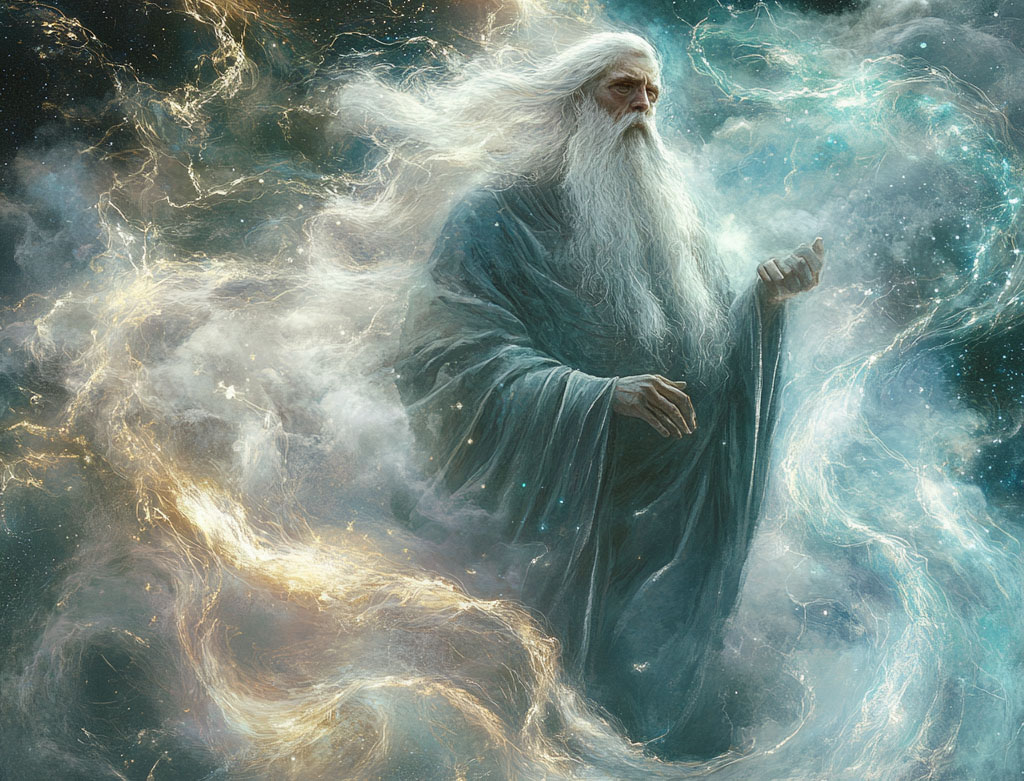
Chapters 12–16 shift focus to Enoch’s mission as a mortal prophet confronting immortal rebels. In chapter 12, God commissions Enoch to deliver judgment to the Watchers, still called “holy ones” in ironic contrast to their crimes.
Chapter 13 depicts their shame: unable to face heaven, they submit a written plea, which Enoch rejects. Praying by the Dan River, a symbol of purity, Enoch avoids Hermon’s tainted ground, aligning with divine will.
Chapter 14 offers a vivid vision of God’s throne room, with crystal walls, fiery gates, and a sapphire throne (14:14; Ezekiel 1:26). Enoch collapses in awe, called to the threshold but not beyond, respecting the divide between human and divine.
Chapters 15–16 analyze the Watchers’ sin: by rejecting their spiritual nature and fathering giants, they birthed chaos. The giants’ spirits become demons, haunting humanity until the final judgment. The Watchers’ teachings linger as “poison,” with no redemption for their treason. Enoch’s role—a human judging angels—reverses the cosmic hierarchy, emphasizing accountability.
Scholars highlight the irony: the Watchers sought to illicitly bridge heaven and earth, yet Enoch, invited by God, stands closer to divinity.
Early Christians linked the giants’ spirits to pagan gods, while Jewish traditions cast Enoch as a scribal pioneer. This section challenges readers to speak truth amid corruption, a call resonant in today’s polarized world.
Chapters 17–36: A Cosmic Tour of Order and Justice
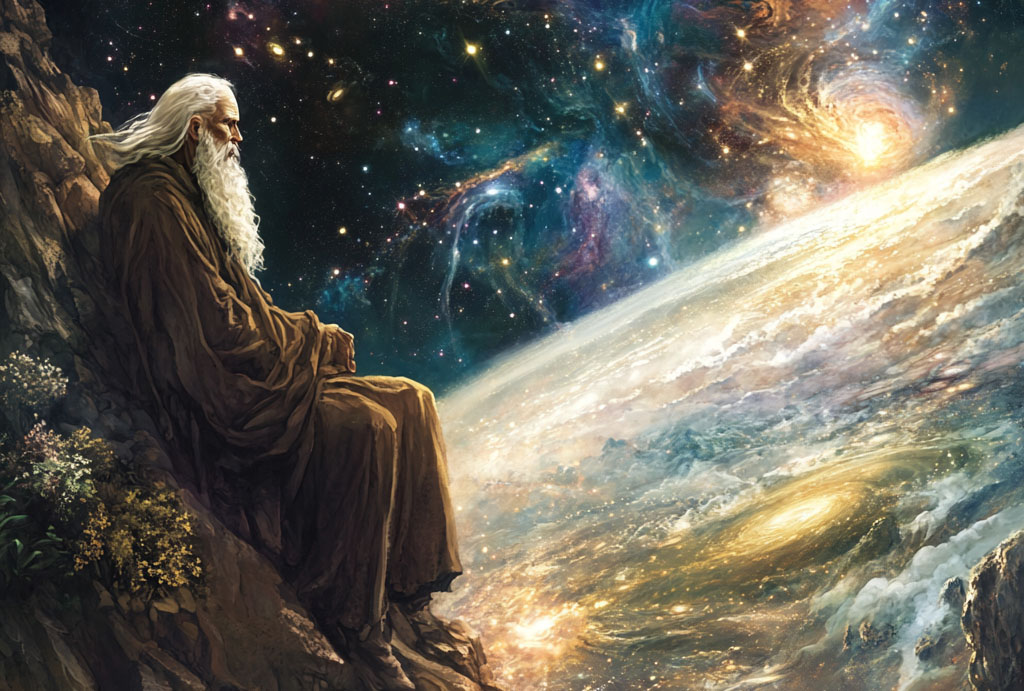
The Book of Watchers concludes with Enoch’s angelic-guided tour of the cosmos, revealing God’s meticulous design. Chapters 17–21 explore creation’s mechanics: a “Place of the Whirlwind,” a fiery river, and Sheol’s shadowy realm.
Chapter 18 describes winds as “pillars of heaven” and disobedient stars – possibly comets or fallen angels—bound for defying order.
Chapter 19 confirms the Watchers’ desert prison and their giants’ demonic legacy.
Chapter 22 introduces Sheol’s “waiting rooms,” where souls await judgment, sorted by their deeds. Abel’s cry for justice persists, unanswered until the final reckoning.
Chapters 24–25 feature the Tree of Life, destined for the New Jerusalem, symbolizing Messianic renewal.
Chapters 26–27 contrast Jerusalem, the “navel of the earth,” with Gehenna, a fiery valley for unfaithful Israelites.
Chapters 28–32 explore spice-rich lands and the Tree of Wisdom, hinting at divine rewards.
Chapters 33–36 detail “portals” governing winds and stars, showcasing creation’s divine engineering.
Scholars see Sheol as a proto-purgatory, distinct from later Christian hell, and the Tree of Life as linking Genesis to Revelation 22:2. The portals blend Jewish and Hellenistic cosmology, reflecting the text’s cultural milieu. This tour underscores that rebellion disrupts a universe designed for harmony, a lesson applicable to environmental and social stewardship today.
Enduring Relevance and Invitation to Explore
The Book of Watchers speaks to modern concerns – power’s misuse, ethical boundaries, and the search for justice in a chaotic world. The Watchers’ forbidden knowledge parallels debates over technology’s dual nature, while Enoch’s truth-telling inspires courage amid moral ambiguity.
The promise of a restored earth, where “sin vanishes,” offers hope for renewal, echoing calls for equity and reconciliation today. As one commentator observes, “Enoch’s vision demands we choose: align with divine order or face the consequences.”
For those eager to delve deeper, an e-book on the Book of Enoch can serve as a companion, unpacking its narratives and applying its wisdom to personal growth and ethical reflection.
Whether drawn to its cosmic drama, angelic intrigue, or moral clarity, the Book of Watchers invites readers to ponder their place in a universe governed by justice and hope.

Pingback: Enoch’s Book of Parables – Book of Enoch Archaic Knowledge
Pingback: Enoch’s Astronomical Book: Divine Visions and Cosmic Wisdom – Book of Enoch Archaic Knowledge
Pingback: The Book of Dream Visions – Enoch’s Prophetic Dreams – Book of Enoch Archaic Knowledge
Pingback: The Epistle of Enoch: Wisdom, Warning, and Hope for the Righteous – Book of Enoch Archaic Knowledge