Following the Book of Watchers (chapters 1–36), Book of Parables (chapters 37–71), and Astronomical Book (chapters 72–82), the Book of Dream Visions (chapters 83–90) presents two allegorical dreams narrated by Enoch to his son Methuselah.
Likely composed in the 2nd century BCE, this section uses animal symbolism to recount history from creation to the Messianic age, offering a vision of divine justice and restoration.
For those drawn to ancient prophecy or seeking spiritual clarity, the Book of Dream Visions provides a compelling reflection on God’s plan and human accountability.
This article explores its themes, narratives, and interpretations, inviting readers to delve deeper—perhaps through an e-book to unpack its allegorical wisdom.
Historical and Literary Context
The Book of Dream Visions emerged during a turbulent period, likely around 160–150 BCE, amid the Maccabean Revolt against Seleucid oppression. Written in Aramaic, it survives in Ethiopic (Ge’ez) and is preserved in Qumran fragments, suggesting its circulation among Jewish sectarians, possibly the Essenes.
Unlike the Astronomical Book’s cosmological focus or the Book of Parables’ Messianic emphasis, this section employs allegory, with humans as animals (e.g., sheep for Israel, wolves for enemies), to narrate history and eschatology.
Drawing from Genesis and prophetic texts like Ezekiel 34, it addressed a persecuted audience, offering hope through divine intervention. Its vivid imagery and historical scope position it as both a theological commentary and a call to resilience.
Chapters 83–84: The First Dream – Cosmic Judgment
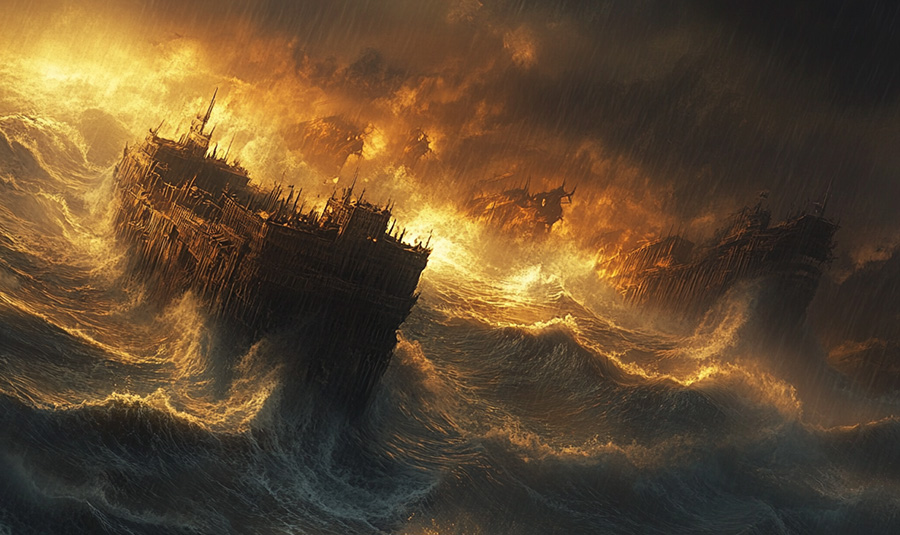
The Book of Dream Visions opens with Enoch recounting his first dream to Methuselah, emphasizing his role as a transmitter of divine wisdom (83:1–2).
Chapter 83 depicts a vision of cosmic destruction: the earth is swallowed, and creation unravels, evoking the Flood of Genesis 6–9. Enoch, distressed, prays for humanity’s survival, seeking mercy for his descendants.
Chapter 84 records his prayer, praising God’s sovereignty and pleading for a remnant to be spared. The dream foreshadows the Book of Watchers’ judgment themes, linking human sin to cosmic consequences.
Scholars interpret this dream as a theological prelude, setting the stage for the historical allegory to follow. The earth’s collapse symbolizes divine retribution for disobedience, akin to the Astronomical Book’s warning of cosmic disorder.
Enoch’s prayer reflects Jewish intercessory traditions, seen in figures like Moses (Exodus 32:11–14). Its brevity contrasts with the second dream’s length, suggesting a focus on universal judgment before the specific history of Israel.
Modern parallels emerge in environmental crises, where human actions disrupt natural systems, urging accountability.
Chapters 85–90: The Second Dream – Animal Apocalypse
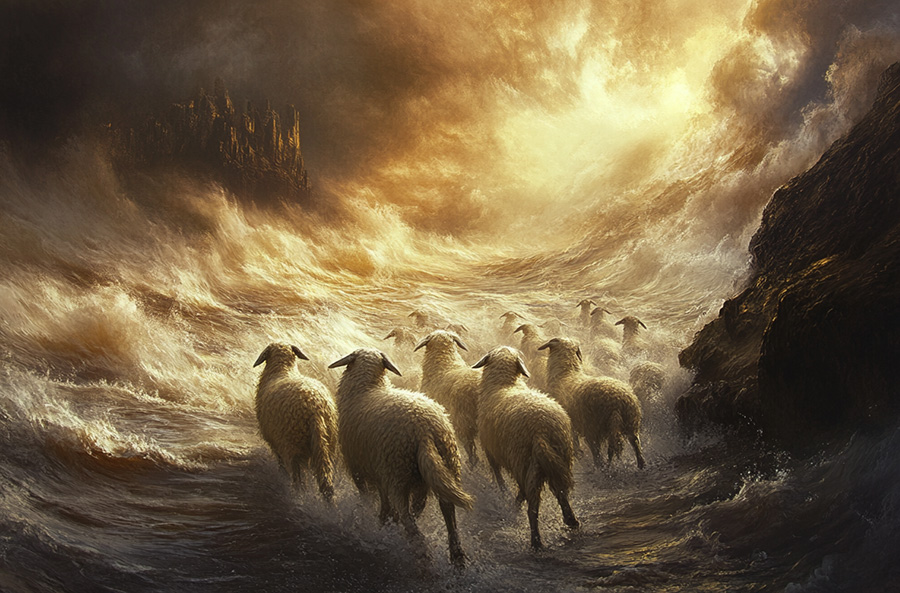
The bulk of the Book of Dream Visions lies in the second dream, often called the Animal Apocalypse, a sweeping allegory of history from Adam to the Messianic era.
Chapter 85 begins with creation: Adam is a white bull, Eve a heifer, and their sons Cain and Abel are bulls of different colors. The narrative uses animals to represent figures and nations – white bulls for patriarchs, sheep for Israel, and predators (wolves, dogs, eagles) for enemies like Egypt, Philistia, and Babylon.
Chapters 86–87 recount the Book of Watchers’ fallen angels as stars mating with human “cows,” producing monstrous hybrids. The Flood destroys this corruption, but humanity’s sin persists.
Chapter 88 depicts Noah as a bull-turned-man, building an ark, while angels bind the fallen stars.
Chapters 89 trace Israel’s history: the patriarchs (bulls), Egypt’s oppression (wolves), the Exodus (sheep led by Moses), and the monarchy (sheep under David and Solomon). The temple’s destruction and exile to Babylon are marked by predators devouring sheep.
Chapters 89–90 focus on the Second Temple period, with corrupt “blind sheep” (Israel’s leaders) straying under foreign rule (Persians, Greeks). The Maccabean Revolt, circa 167–160 BCE, appears as rams led by a horned sheep, likely Judas Maccabeus, resisting Seleucid “birds” .
Chapter 90 envisions a final judgment: a throne is set, the “Lord of the Sheep” (God) condemns the wicked, and fallen angels are cast into an abyss, echoing the Book of Watchers. Depiction of a Messianic age: a new Jerusalem rises, a white bull (possibly the Messiah) leads, and nations join the sheep in peace.
Scholars view the Animal Apocalypse as a coded history, using allegory to critique Hellenistic oppression and corrupt Jewish elites while predicting divine deliverance.
Its dating to the Maccabean era is inferred from references to the revolt and lack of later events. The Messianic bull’s ambiguity – perhaps a Davidic king or collective Israel – parallels the Book of Parables’ Son of Man debate.
The text’s hope resonates with modern struggles against injustice, from systemic inequality to cultural erosion, encouraging resilience.
Interpretations
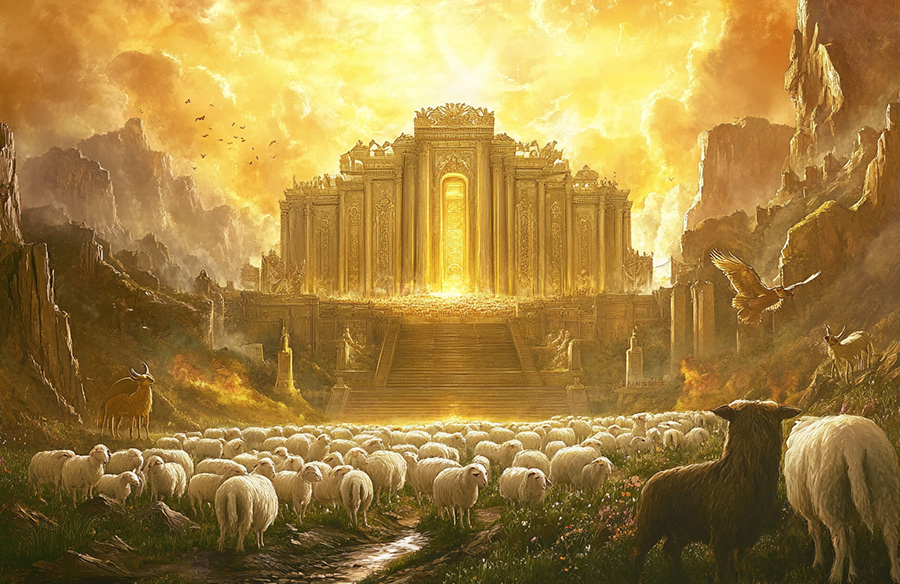
The Book of Dream Visions weaves several theological threads:
First, divine sovereignty permeates the text: God, as the Lord of the Sheep, orchestrates history, from creation to judgment. The animal allegory underscores that no nation or power escapes divine oversight, a comfort to an oppressed audience.
Second, human responsibility is central: Israel’s “blindness” (89:74) reflects failure to uphold the covenant, inviting predation, much like the Astronomical Book’s cosmic disorder tied to sin (80:2–6).
Third, eschatological hope drives the narrative. The Messianic age, with a new temple and global unity, builds on the Book of Parables’ vision of a transformed earth. Scholars debate whether the white bull symbolizes a Messiah or restored Israel, but its role signals renewal, akin to Isaiah 65:17–25. Early Christians saw parallels to Jesus’ kingdom, though the text remains firmly Jewish.
Fourth, the Animal Apocalypse’s historical scope – from Adam to the Maccabees – sets it apart from other apocalypses, offering a linear view of God’s plan, unlike the Book of Watchers’ focus on angelic sin.
The text also engages its cultural context. The animal symbolism, rooted in Near Eastern traditions (e.g., Babylonian omens), made the allegory accessible yet subversive, masking critiques of Seleucid rule.
Its alignment with the Astronomical Book’s 364-day calendar suggests a sectarian agenda, urging fidelity to a distinct Jewish identity. These themes speak to modern concerns: the tension between faith and power, the hope for justice, and the need to preserve cultural roots in a globalized world.
Invitation to Explore
The Book of Dream Visions remains strikingly relevant. Its allegory of sheep resisting predators mirrors contemporary struggles against oppression, whether political, economic, or cultural.
The judgment scene, with the wicked cast into an abyss, underscores accountability, resonating with calls for justice in systems marked by corruption or inequality.
The Messianic vision of a new Jerusalem and unified nations offers hope amid global crises, from conflict to environmental degradation, echoing the Astronomical Book’s call to honor creation’s order.
Enoch’s role as a visionary teacher challenges readers to share wisdom, much like his charge to Methuselah. In an era of division and misinformation, this invites reflection on how we preserve truth and foster community.
As one scholar observes, “Enoch’s dreams remind us that history bends toward justice, but only through faithful endurance.” For those captivated by its allegorical depth or eschatological promise, an e-book on the Book of Enoch can serve as a guide, illuminating the Animal Apocalypse’s symbols and connecting its insights to modern life.
Whether drawn to its historical sweep, moral clarity, or vision of renewal, the Book of Dream Visions calls readers to trust in divine purpose and act with courage.